The Pool Man Scam is a common tactic used by untrustworthy service providers who prey on homeowners with promises of low-cost pool care. It typically begins with a too-good-to-be-true monthly service rate—often under $145. While the price may seem attractive, it’s far too low to cover the actual costs of proper maintenance, chemicals, and business operations.
Once hired, these pool men often cut corners to protect their profit. In many cases, they pocket the money but skip essential chemical treatments, leaving the pool water unbalanced and potentially unsafe. This neglect can severely damage your pool’s pump, filter, and other equipment—causing thousands of dollars in repairs.
When problems start showing, the blame is quickly shifted to "bad equipment". This is usually followed by a hard sell on expensive and unnecessary replacements as a way to generate more income. Despite the upgrades, the issues continue, and the customer eventually grows frustrated and terminates the service.
Sadly, the scam doesn’t stop there—it repeats with the next unsuspecting homeowner, creating a treadmill of financial loss and frustration.
At Elite Pool Service, we pride ourselves on honesty, professionalism, and delivering real results. No shortcuts. No gimmicks. Just clean, healthy pools and transparent service you can trust.

Maintaining proper chemical levels is essential for a clean and safe swimming pool. Here's a breakdown of what a typical pool might require:
The standard guideline is 1 gallon of liquid chlorine per 10,000 gallons of water.
For example, a pool with 25,000 to 30,000 gallons will need approximately 3 gallons of chlorine per treatment. In warmer weather or during periods of heavy use, you may need an additional 1 to 2 gallons.
In addition to chlorine, it’s important to maintain the pH level and ensure the water is properly conditioned. These factors directly affect how effectively chlorine works.
Biological debris (like leaves, grass, and oils) can raise phosphate levels, which fuel algae growth. Phosphate treatment is typically needed once a year, or more often if conditions demand.
Using an algaecide on a regular schedule helps prevent algae from forming in the first place. This is a key part of a comprehensive maintenance plan.
These estimates are reflected in the cost graph shown above.
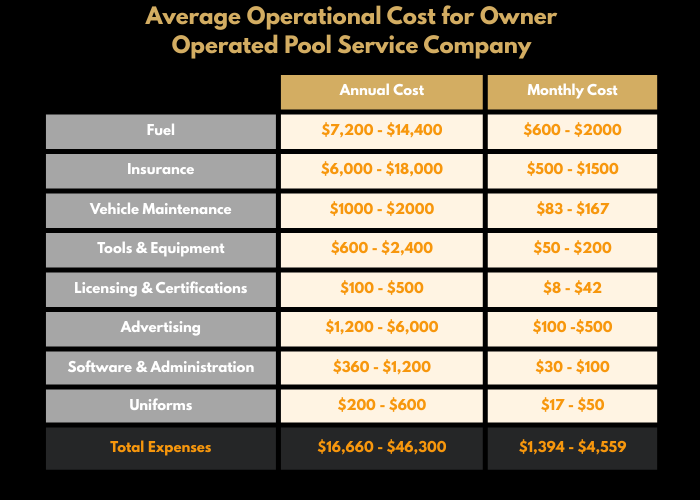
Operating a pool cleaning business involves a wide range of expenses beyond the cost of pool chemicals. These overhead and operational costs can significantly impact your monthly and annual budget. Here's a detailed breakdown of common expenses:
Taken together, these additional costs can add anywhere from $1,394 to over $4,559 per month depending on the size and scale of the business.